

This article is an excerpt from our Cryptocurrency Geography 2025 report. Download the full report now!
Latin America’s Growing Crypto Footprint
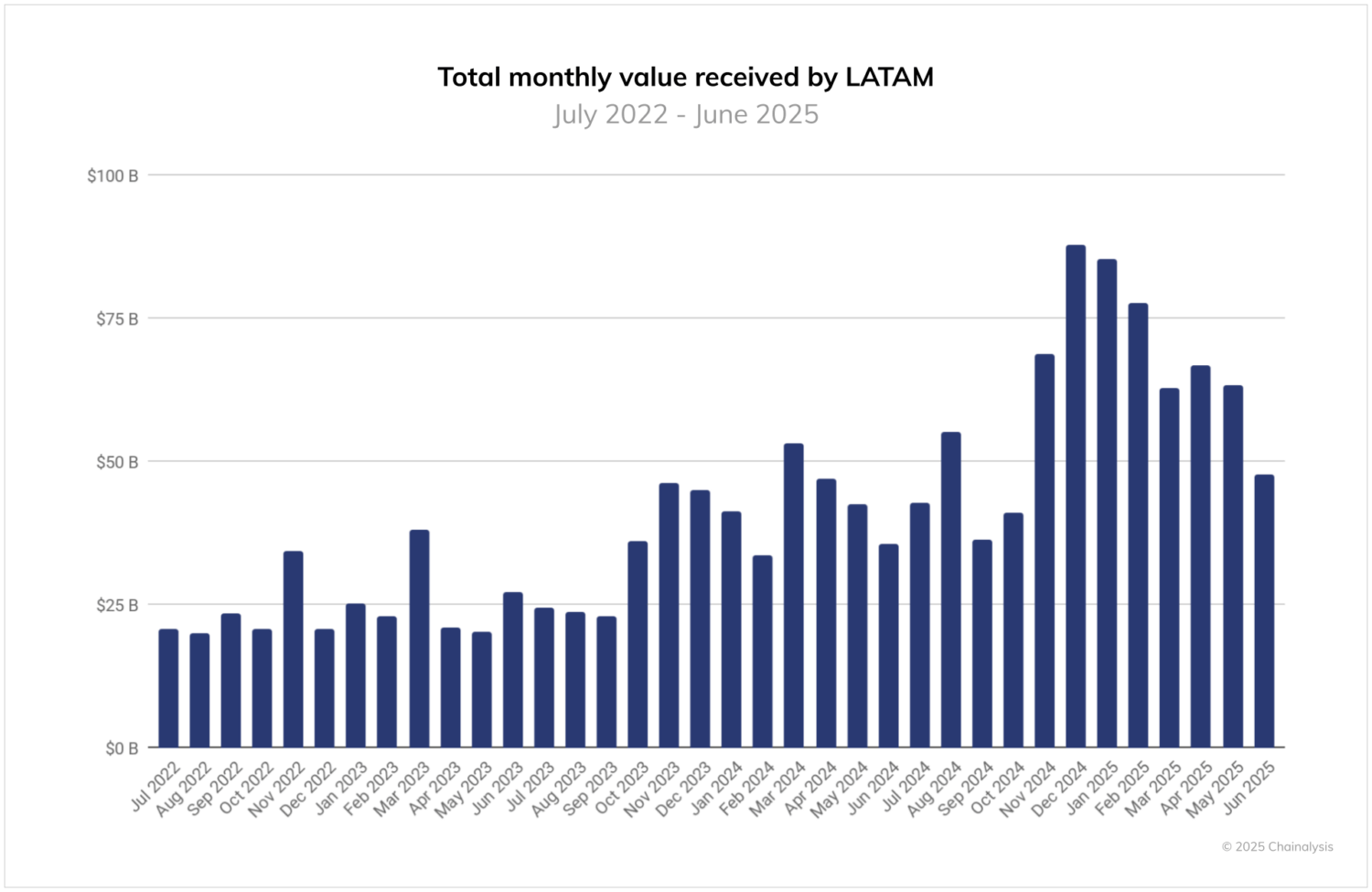
Between July 2022 and June 2025, Latin America recorded nearly $1.5 trillion in cryptocurrency transaction volume, making the region one of the most dynamic in the world. The trajectory has been volatile but undeniably upward: from $20.8 billion in crypto trading volume in July 2022, activity surged to a record $87.7 billion in December 2024, with several months in late 2024 and early 2025 maintaining levels above $60 billion.
The main growth phases included:
- November 2022 and March 2023, when the monthly totals exceeded $34 billion and $37 billion, respectively.
- End of 2023, which generated a series of records, including $46.3 billion in November and $45.1 billion in December.
- End of 2024, when volumes more than double from the previous year’s peak, culminating with the peak of $87.7 billion in December.
Although volumes cooled slightly in the first half of 2025, with figures moderating at $47.9 billion in June, the region remains on a significantly higher baseline than in 2022 or 2023, highlighting the enduring momentum behind crypto adoption, despite short-term volatility.
This trajectory reflects not only the growth of crypto adoption globally, but also the unique economic context of Latin America. As we have noted in previous years, the winning trio persistent inflationCurrency volatility and restrictive capital controls in several countries in the region continue to drive demand for stablecoins as a safe store of value and hedge against local macroeconomic risk. At the same time, the region’s position as a major remittance corridor has accelerated demand for crypto to facilitate faster and cheaper cross-border transfers.
The broader LATAM crypto ecosystem
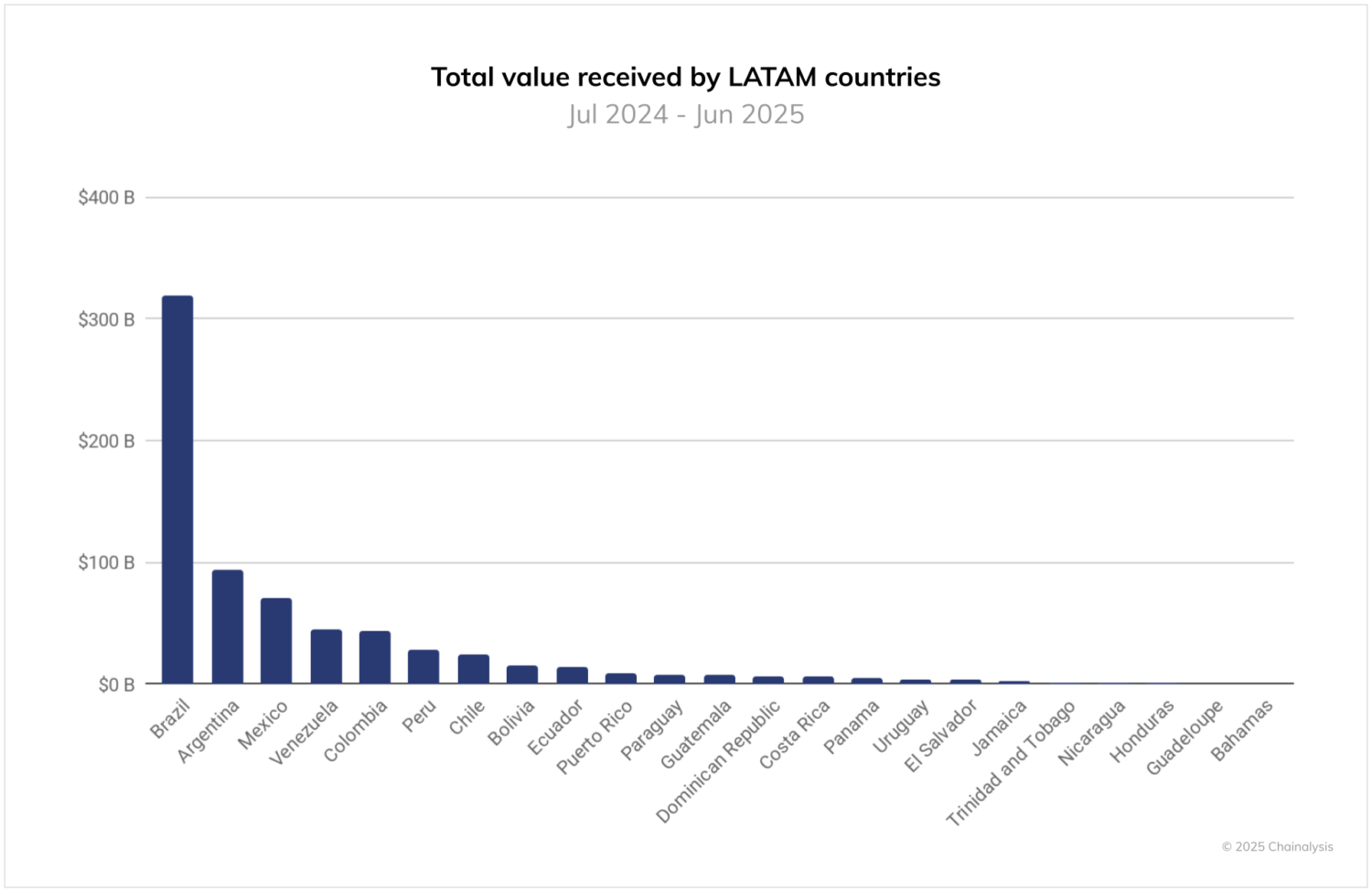
Brazil dominates the LATAM region with $318.8 billion in crypto value received, accounting for nearly a third of all LATAM crypto activity. This dramatic increase represents one of the most significant growths in the region, making Brazil the undisputed crypto leader in Latin America.
Argentina ranks second regionally with a transaction volume of $93.9 billion, which is consistent with trends seen in our previous Adoption Index. Mexico ($71.2 billion), Venezuela ($44.6 billion) and Colombia ($44.2 billion) round out the top five. Smaller markets like Peru ($28.0 billion), Chile ($23.8 billion) and Bolivia ($14.8 billion) also play an important role, while El Salvador, despite its well-known penchant for bitcoin, contributed in more modest volumes ($3.5 billion).
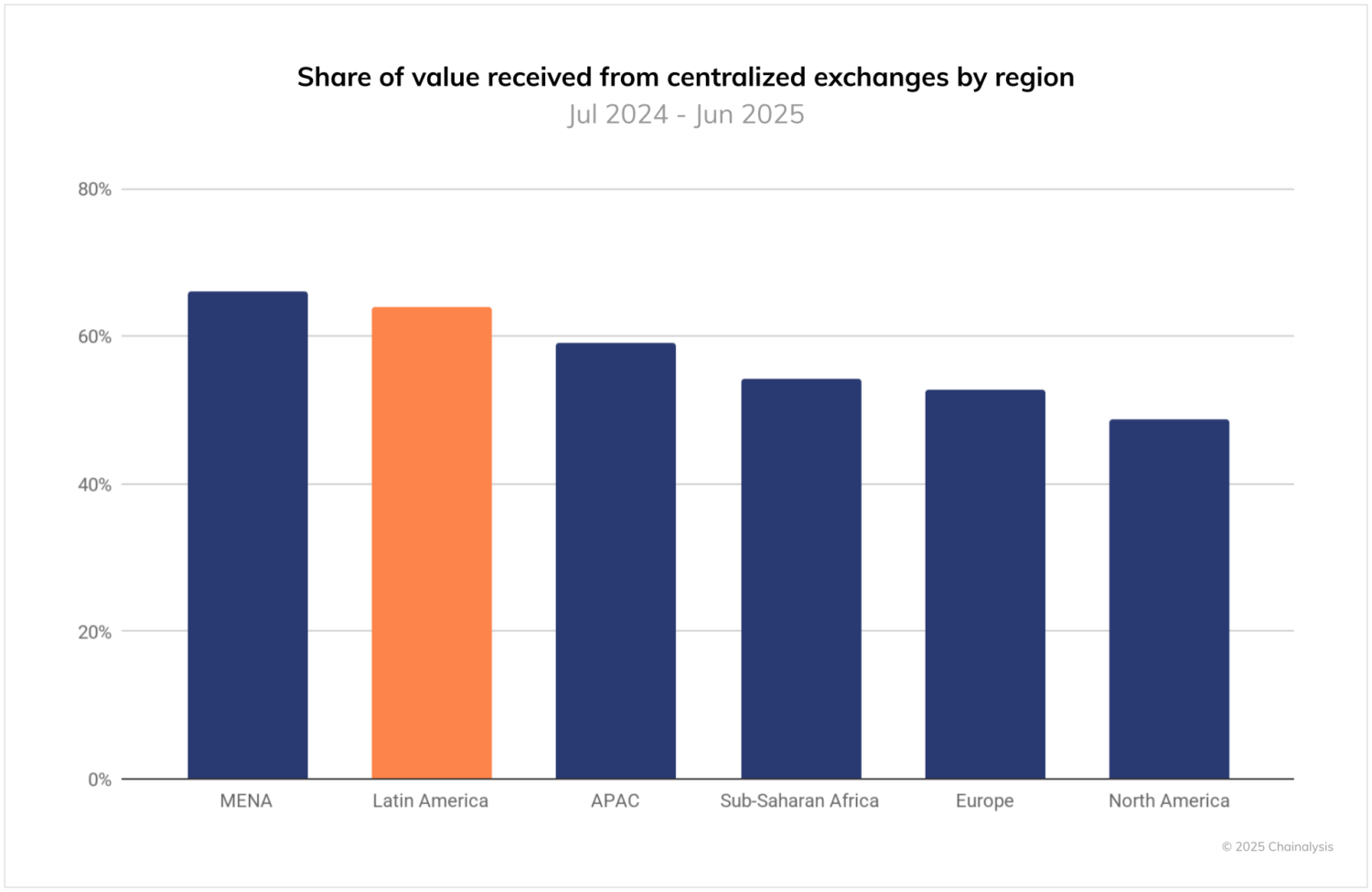
Centralized exchanges remain the dominant entry point for crypto in most regions, but Latin America stands out with 64% of activity taking place on CEXs, just behind MENA (66%) and significantly higher than North America (49%) and Europe (53%). This reliance on centralized platforms reflects both accessibility and trust: for many users in the region, exchanges provide the easiest way to acquire cryptocurrencies, trade cryptocurrencies, and transfer money across borders. Leading local platforms such as Mercado Bitcoin (Brazil), Ripio (Argentina), Bitso (Mexico), Wenia (Colombia), and SatoshiTango (Argentina) have become household names, building strong user bases by offering fiat on-ramps, remittance services, and integrations with local payment systems.
Brazil leads the LATAM region
In addition to leading in terms of total trading volume, Brazil’s period-over-period growth rate of 109.9% highlights its position as the most dynamic crypto market in the region. This exceptional growth trajectory stands in stark contrast to other major Latin American markets, as shown in the chart below.
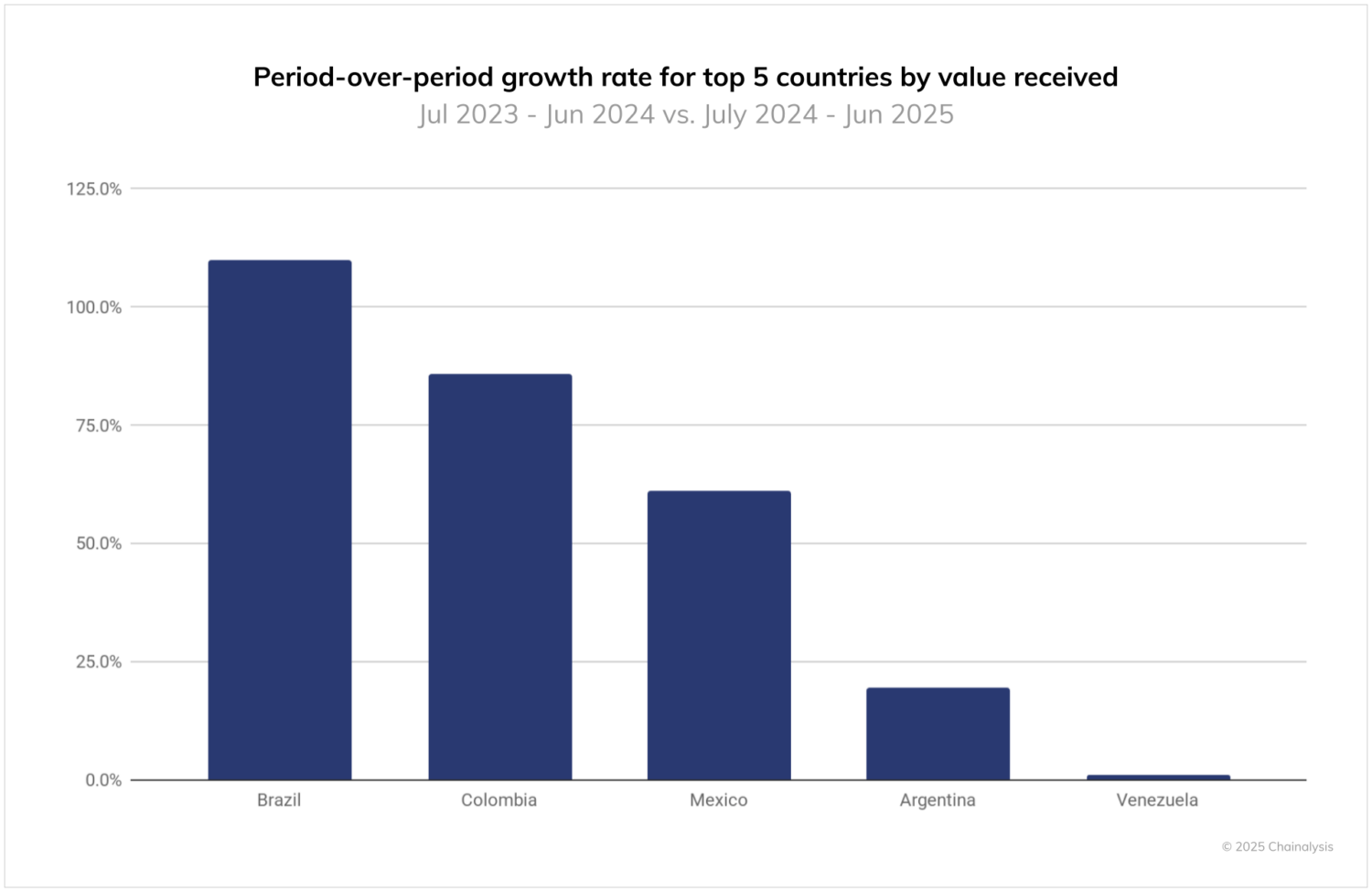
While crypto policy and regulation in Latin America tends to lag behind adoption, Brazil is one of many countries that have already implemented significant crypto regulations, including 2022/2023. Brazilian Virtual Assets Law (BVAL), which sets requirements for crypto companies (including KYC and transaction reporting) and established the Banco Central do Brasil (BCB) as the competent authority for AML/CFT matters. In Brazil, enthusiasm persists to go further, which suggests that this dynamic will continue at the pace of the publication of a series of consultations (nos. 109, 110 and 111/2024), the rules of which are expected by the end of 2025.
The growth of the Brazilian crypto economy has been largely driven by institutional and large institutional transfers, both of which increased by more than 100% from one period to the next. But the data also suggests that Brazil’s growth is broad-based, with significantly large increases across all transfer sizes.
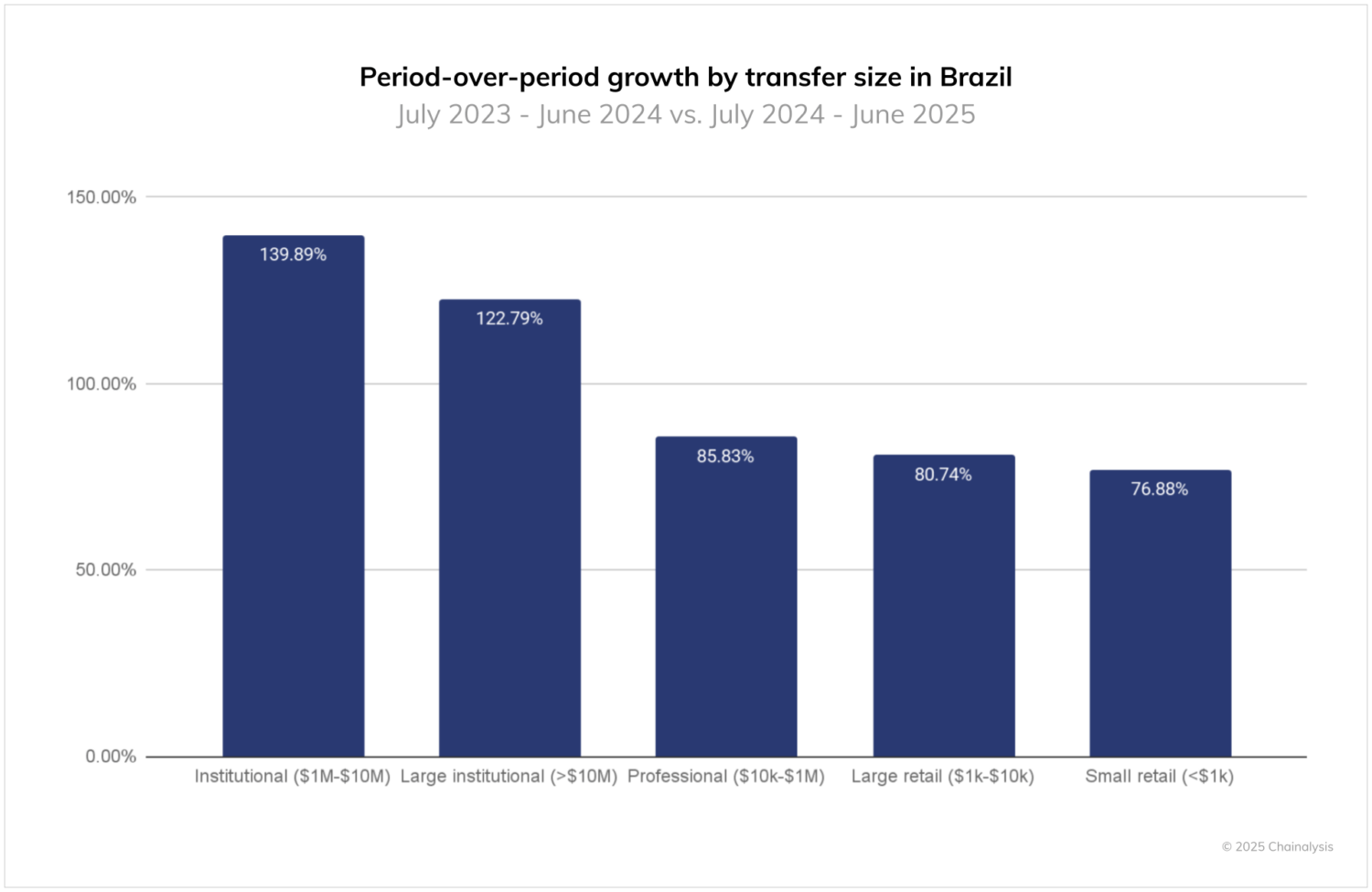
Stablecoin usage has increased significantly, with officials reporting that more than 90% of Brazilian crypto flows are now linked to the stablecoinhighlighting their crucial role in cross-border payments and transfers. This thriving stablecoin market, combined with growing transaction volumes, solidifies Brazil’s position as a regional growth hub.
Institutional engagement with crypto, which we have tracked in previous years, remains a key driver of this growth, with many of BCB’s previous regulatory decisions helping to create a vibrant ecosystem for large institutions to enter. Encouraged by this, traditional banks like Itau and neobanks like Mercado Pago and Nubank have entered the space. As we move towards a more regulated environment by the end of 2025, we believe Brazil will maintain its central position, backed by strong institutional interest. This trajectory depends on finding the right regulatory balance to ensure that retail activity remains safe, well-supported and attractive to participants.
Stablecoin activity and LATAM exchange
In fiat-to-crypto transactions, Brazil’s market leadership is even more pronounced, with the strongest period-over-period growth in local currency cryptocurrency purchases. This contrasts with Argentina and Mexico, where activity has been relatively stable, and Colombia, where cryptocurrency purchases have seen more notable ups and downs.
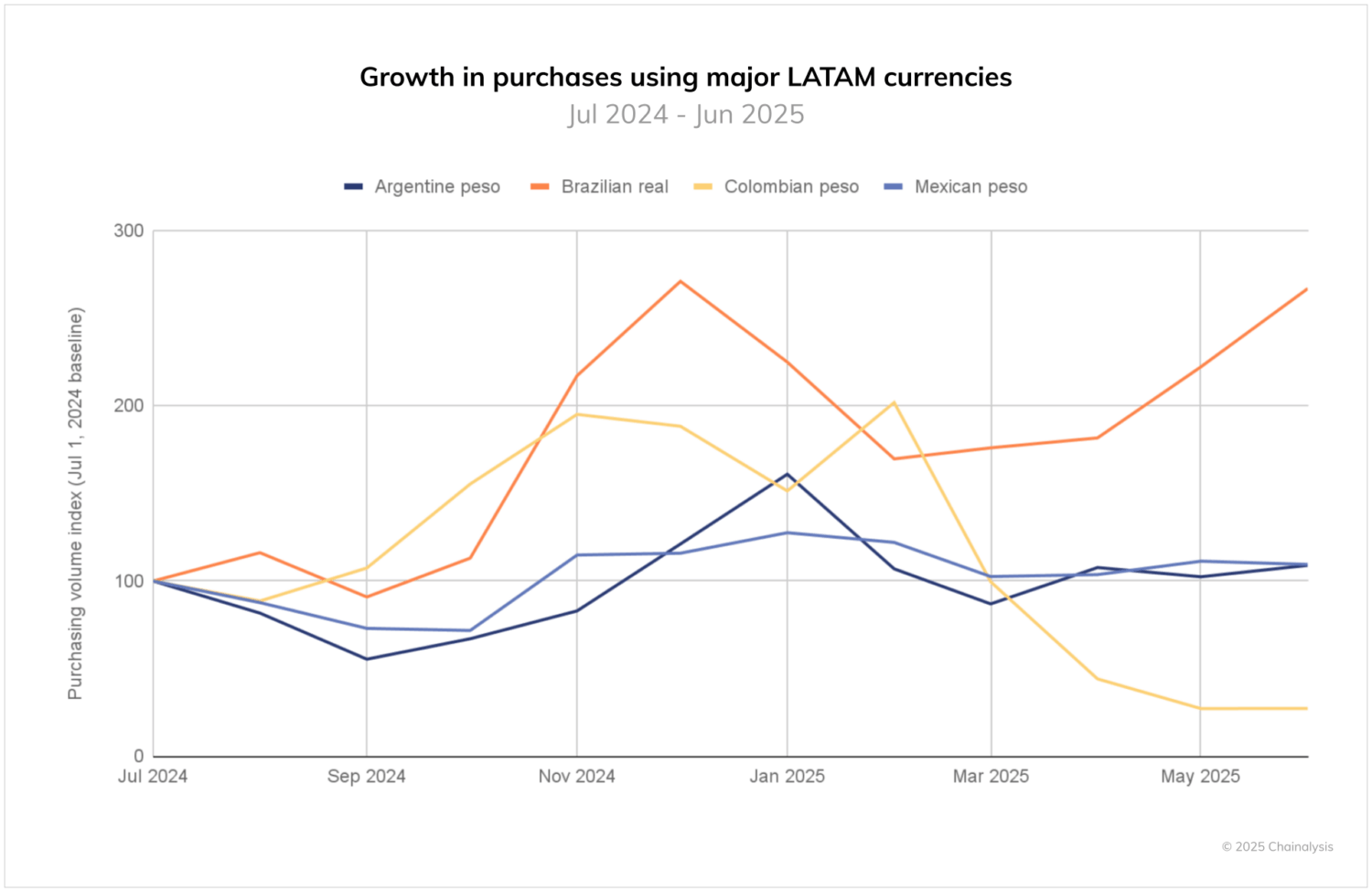
Much of this trading activity involves the purchase of stablecoins. In the case of the Colombian peso, the Argentine peso, and the Brazilian real, stablecoin purchases account for more than half of all purchases on exchanges between July 2024 and the end of June 2025 (note that this is based on order book data included in CryptoCompare and therefore is not a complete view of all CEX activity). The dominance of stablecoins in Latin America reflects persistent inflation, currency volatility and capital controls, which drive households and businesses to seek stability linked to the U.S. dollar for savings, remittances and trade. In effect, stablecoins serve as a parallel financial system, providing both a hedge and a convenient payment tool where local currencies often fail to provide stability.
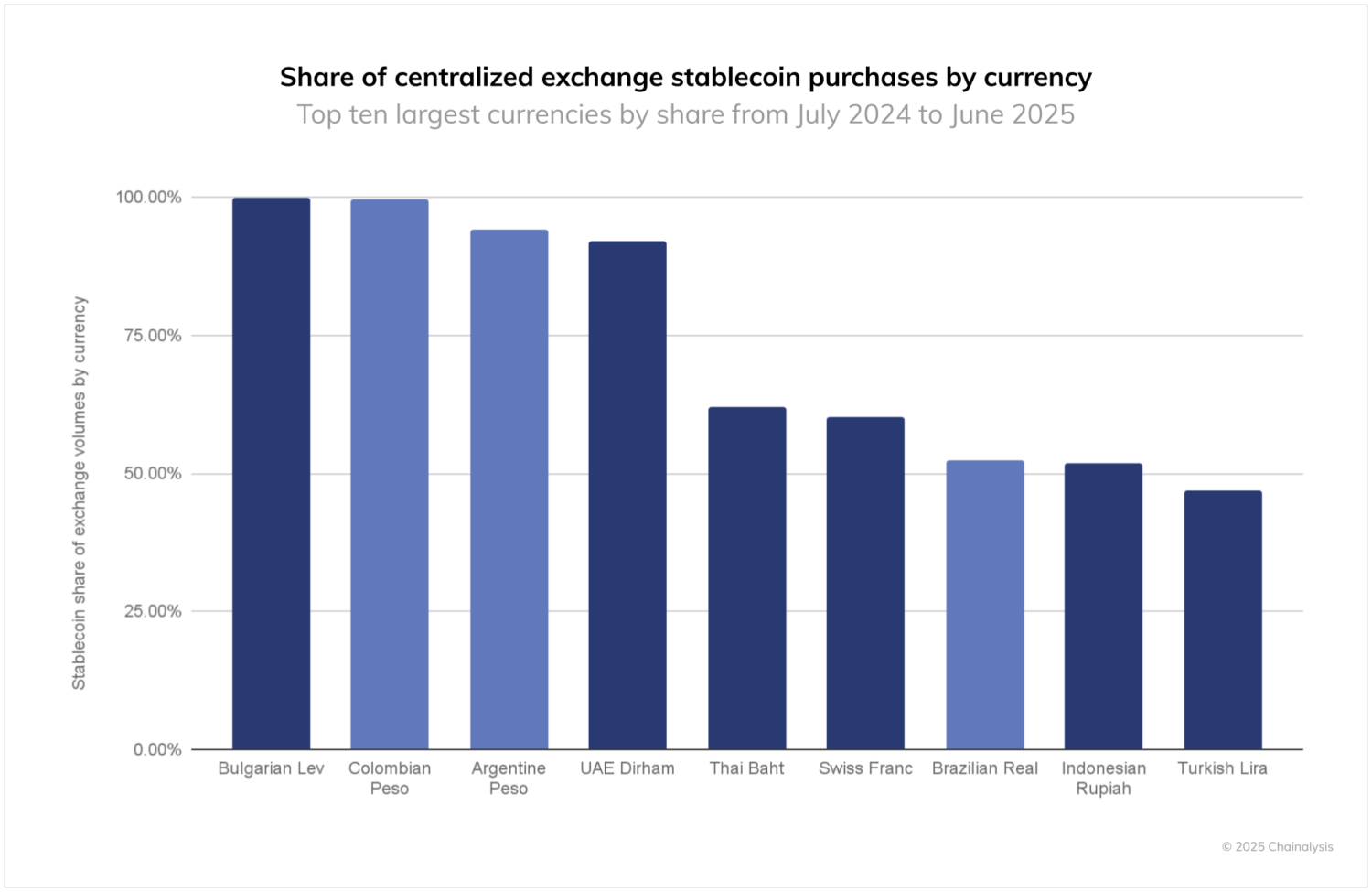
Looking ahead, Latin America’s crypto ecosystem appears poised for continued growth, driven by the interplay of institutional adoption in markets like Brazil and continued retail demand for stablecoins in the region. Although each country faces unique challenges and opportunities, the region’s overall trajectory suggests that cryptocurrencies, and particularly stablecoins, have evolved beyond early adoption to become an integral part of Latin America’s financial landscape. While stablecoins continue to serve as a crucial hedge against local currency volatility and an efficient means of cross-border transfers, the key to maintaining this momentum will lie in finding the right balance between innovation and regulation, especially as more countries follow Brazil’s lead in developing comprehensive crypto frameworks.
This website contains links to third party sites that are not under the control of Chainalysis, Inc. or its affiliates (collectively “Chainalysis”). Access to this information does not imply any association, endorsement, approval or recommendation by Chainalysis of the site or its operators, and Chainalysis is not responsible for any products, services or other content hosted there.
This material is provided for informational purposes only and is not intended to provide legal, tax, financial, or investment advice. Recipients should consult their own advisors before making these types of decisions. Chainalysis assumes no responsibility for any decision made or any other act or omission in connection with the recipient’s use of this material.
Chainalysis does not guarantee the accuracy, completeness, timeliness, suitability or validity of the information contained in this report and will not be liable for any claims attributable to errors, omissions or other inaccuracies in any part of this material.


